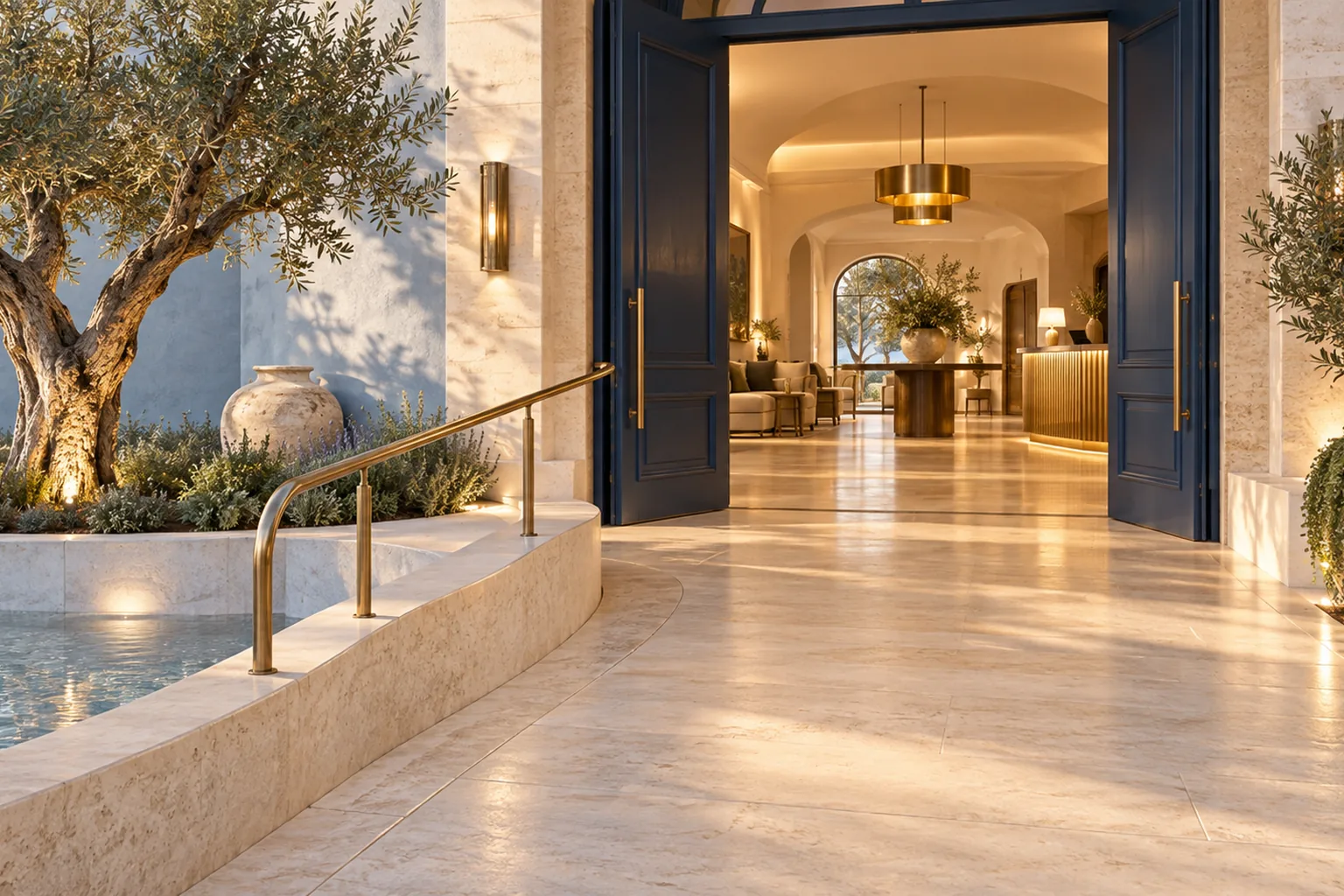
Is one accessible-room label enough?
When answering an accessibility request, check the connected route from arrival to entrance, assigned room and relevant shared area. One suitable segment does not establish suitability for the entire journey. This is our proposed operating workflow, informed by public guidance checked on 10 October 2026. It is not an architectural standard, legal compliance assessment or guarantee for an individual's needs. Airbnb requests feature-specific photographic evidence; its guest guidance recommends discussing individual needs with the host. Those are platform-specific references. Do not assume another channel offers the same review. Check the physical service and its description separately. People have different requirements, so a general label cannot answer every practical question.
Turn the request into service questions
Start with the area the guest needs to use, rather than unnecessary personal details. Are they asking about the entrance route, movement in the room or bathroom access? Summarize the question and confirm understanding, then involve someone who knows that area. Do not estimate unverified doors, thresholds, lifts or passages. Where measurement is needed, explain the current measurement and its endpoints. Do not derive dimensions from an old photograph. This guide prescribes no universal size threshold. Keep four fields: requested feature, verified area, unresolved point and responsible verifier. A more precise question remains pending until checked. Reception saying yes does not confirm the assigned room. If the room changes, do not transfer earlier assurance automatically. Share only information necessary for preparing the service with the relevant colleague; investigating medical history is not part of this check.
Fictional example: entrance checked, room route pending
Imagine a boutique property's entrance information is current, but the selected room type has units on different floors. A passage to the planned unit has not been checked. This is no real guest or hotel. Share the verified entrance information and explain that the room route awaits confirmation. Do not infer suitability of every room from the entrance. Examine the intended unit and route before answering with relevant current measurements or photographs. If proposing another unit, verify that unit again. Do not call an alternative an equivalent experience or guaranteed solution. Make clear which room and area the answer concerns. Temporary objects or maintenance can affect the route, so review it for the approaching arrival. A photo supports a description; it does not establish satisfaction of every need. Present verified details, limits and remaining uncertainty together so the guest can decide.
Confirm and hand over
Before arrival, review assigned room, entrance, room route and relevant common space together. The colleague preparing the stay should know which evidence informs the task. Reassess earlier confirmation after changes and communicate current details. Completing preparation and sending a message are separate steps. Keep finished tasks distinct from unanswered questions. This is a suggested team workflow, not a mandatory platform process. Track resolved uncertainties and recurring information gaps. Fewer questions do not prove universal accessibility. Avoid unsupported legal or safety claims. The purpose is accurate information from the right colleague about the right space, maintained through room changes. Connect this review with room assignment and service preparation through the related operations guides.