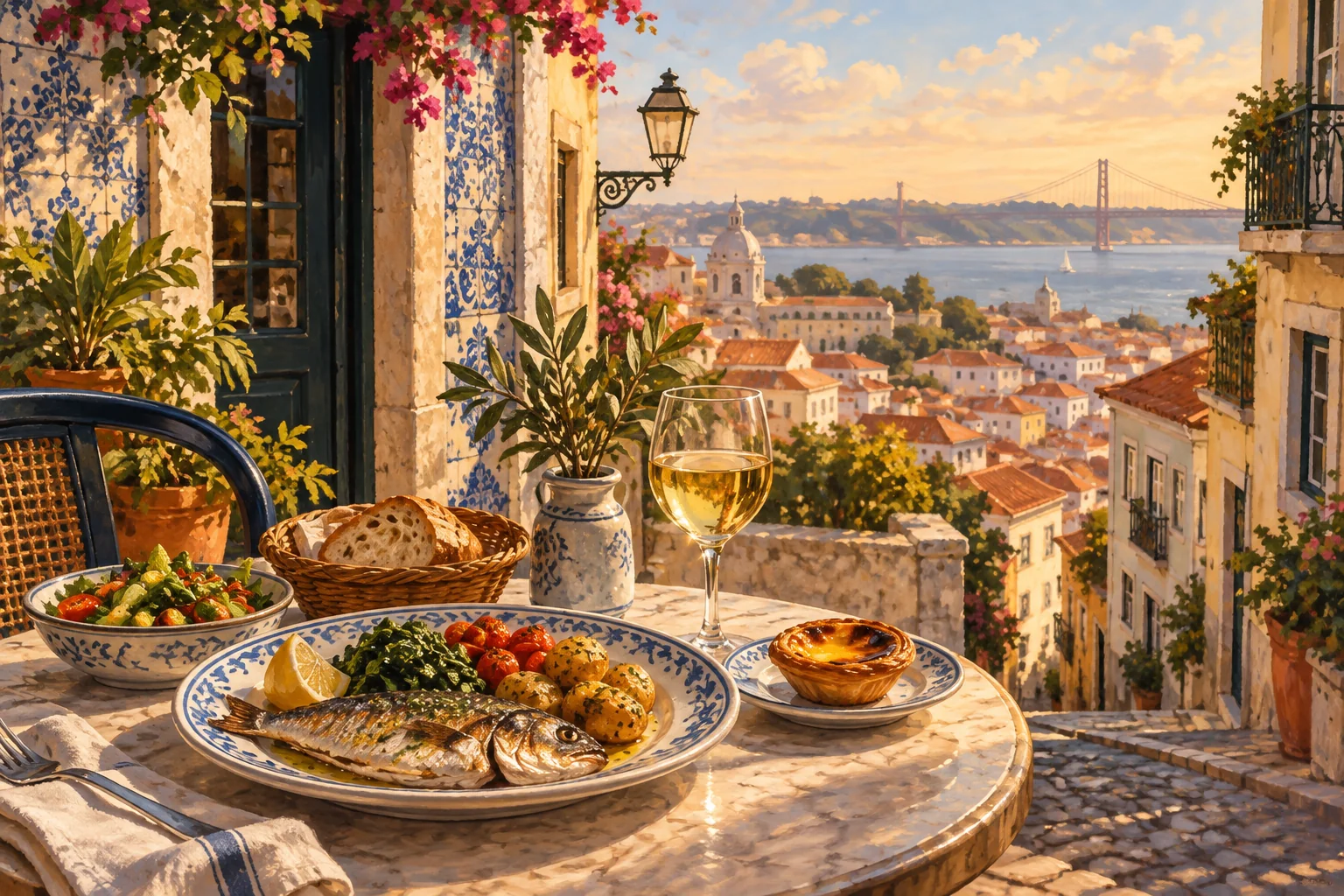
Choose the kind of meal first
Start a Lisbon food plan with what you want from a meal, rather than a restaurant list. A quick bite between visits, a shared table and a longer sit-down meal are different choices. Pick one main format for today. Then write down one food name you want to understand and the area where you intend to eat. Those two lines help you decide without adding every photographed plate to the programme. The glossary and examples below are tools for reading menus and making your own choices.
Separate sandwiches from savoury snacks
In Portuguese menu vocabulary, bifana means a pork sandwich and prego a beef sandwich. Salgados includes savoury snacks such as pastéis de bacalhau, rissóis de camarão and croquetes; the first two point to cod and shrimp. Knowing a name gives you a starting question before ordering. It does not tell you everything about ingredients or size. Match the venue’s description and portion to the break you want, instead of assuming a sandwich and a serving of snacks will work identically.
Read the preparation after bacalhau
Bacalhau refers to salted, dried cod, rather than the day’s fresh catch. The preparation name matters too: à Brás combines shredded fish, thin fried potatoes and egg, while com natas points to cream and béchamel. These are broad distinctions for reading a menu. Keep the two names separate when deciding which kind of plate interests you, then compare the venue’s description. If you avoid particular ingredients, ask directly: a short glossary is not the complete ingredient list or preparation conditions of that kitchen.
Build a shared order together
Petiscos means small dishes for sharing; octopus salad and clams called amêijoas are examples. The term does not establish a fixed menu or a sufficient portion for every group. Talk about what each person wants and avoids before ordering, then ask the venue about the size of the proposed order. Sharing need not become a reason to add a plate nobody particularly wants. Start with the table’s preferences rather than a predetermined number of dishes, and leave room to decide together.
Think about season as well as dessert
Pastel de nata is a custard tart that can accompany coffee. Roasted chestnuts belong to autumn traditions, especially São Martinho; Lisbon’s grilled-sardine story is linked to June’s Santos Populares celebrations and summer. This distinction stops a summer festival description becoming an October programme. For today’s sweet break, think about what you want to taste and how much more food you want. A seasonal tradition does not locate a particular vendor or announce an event: use dated information if an event is the purpose of the outing.
Connect the meal to your day’s neighbourhood
Choose a food focus around the area that fits your day: Mouraria and Alfama, Cais do Sodré or Belém. Turismo de Lisboa discusses these areas alongside different community cuisines, distinguishing examples from Mozambique, Cape Verde and Angola. Keep that diversity visible rather than treating it as one identical cuisine. Select the cuisine that interests you and read the individual business’s menu. That is more useful than projecting the same expectation onto every restaurant in a neighbourhood or adding meals in three areas simply to complete a list.
Narrow the menu with three imagined choices
These imagined decision cards link a preference, a meal format and a question. They are not restaurant visits or tested orders. Write down what you want before eliminating options that do not fit. One traveller’s choice need not suit a whole table. Use the cards to direct your attention on a menu, rather than as a shopping list for every dish. The same question can produce different answers at different businesses, so make the final choice from the current description.
- Sandwich preference: bifana or prego; quick meal; “Which meat and ingredients are used?”
- Sharing preference: petiscos; shared meal; “What are the portions in this order like?”
- Sweet with coffee: pastel de nata; separate break; “Could you explain the ingredients?”
Keep one main choice and check with the business
Finish with one savoury choice for today and an optional separate sweet break. If the neighbourhood and meal do not fit your day, remove additions before adding another area. The sources help explain names and cultural context. Current menus, ingredients, dietary suitability and reservation conditions need the business’s own information. If you must avoid a product, do not rely on the dish name alone. A useful plan helps you understand what you order and fit it to the day, rather than consume every example.