Do not reduce Rome to one checklist
For a first visit to Rome, the useful question is not how many monuments can fit into a day. It is what kind of day you want: historic squares, a large park, or a neighborhood shaped by food. You do not have to combine all three. Choose your interest and pace first, then give each choice one main area. This guide simplifies those decisions and leaves changing schedules to official pages.
Historic centre: the Pantheon and Piazza Navona
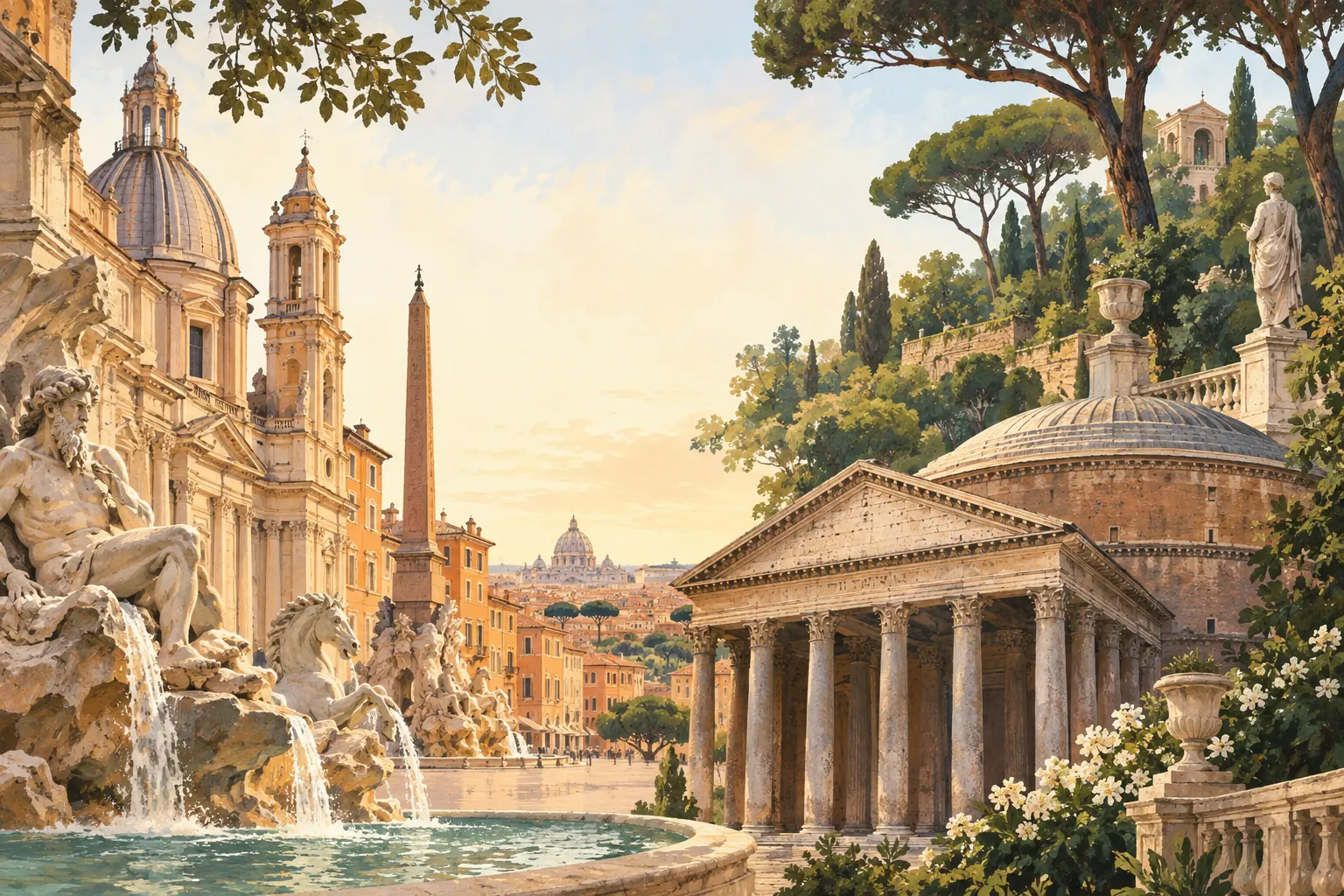
If classical Rome is your focus, consider the Pantheon and Piazza Navona as possible anchors. The Pantheon stands in Piazza della Rotonda. Today’s outline of Navona follows the perimeter of the ancient Stadium of Domitian, and its Fountain of the Four Rivers is by Bernini. These facts do not mean both places must fit into one day. Make room for pauses in the squares and nearby streets as part of the plan.
Villa Borghese: make room for green space
If you want open air and a slower pace in the city, Villa Borghese offers a different kind of Rome. The official tourism page describes gardens, ponds, mature trees and broad open spaces. Separate museum institutions also sit within the park. A walk in the park and a museum visit are different plans; check the museum operator’s own page for entry conditions. Keeping them distinct prevents a green-space break from being mistaken for a ticketed visit.
Testaccio: connect a neighbourhood with food culture
For a food-centred day, you can consider Testaccio as one neighbourhood option. Turismo Roma places it on the left bank of the Tiber and connects the area with traditional Roman cuisine. That is not a guarantee about any restaurant’s quality or current menu. Treat the meal as one main stop; rather than crossing many districts in one day, choose nearby public places that interest you and verify opening details before visiting.
How many areas should you choose in one day?
Searches for “things to do in Rome” often lead to long lists, but each stop adds a decision, a transfer and possible waiting. A more usable method is to choose one main area and, if desired, one secondary stop. Consider the Pantheon–Navona area for history and architecture, Villa Borghese for open air, or Testaccio for a food focus. These are not rankings; they are modules you can choose from and spread across days.
Check entry conditions for each historic site separately
Knowing where a square or monument is does not confirm that interior access is available. This guide does not lock in Pantheon ticket, reservation, worship or visiting rules; check the operator’s page for your date. Likewise, the presence of Villa Borghese park does not imply automatic entry to museums within it. The official tourism page treats the park and institutions separately. This source discipline keeps changing conditions from becoming misleading advice.
A list of things to leave out for a calmer day
Leaving out a stop is not failure; it is how you adapt a trip to real energy levels. Write down the day’s main purpose, then add a second area only if your time and the weather allow. If you plan a long museum visit, leave free time instead of adding another ticketed institution. With children, older travellers or anyone with limited mobility, check gradients, rest areas and accessible routes separately; a general map cannot guarantee walkability.
Tie the meal plan to the neighbourhood
If you want to try Roman cuisine, you do not need a city-wide contest of restaurant lists. Research options near the main area you have chosen and verify opening days and the current menu through the business itself. Turismo Roma connects Testaccio with traditional cuisine; that is not a quality verdict on every venue. Ask the business directly about allergens, ingredients, prices and reservations. This helps without presenting a promotional ranking as personal experience.
Final checks before you go
Some city facts feel permanent, but museum hours, events, tickets and transport can change. Before travelling, reopen the relevant Turismo Roma pages and check the entry notes for your date, not only location details. Review notices from each museum within Villa Borghese separately. Verify transport to the historic centre or Testaccio using current municipal sources. This is a planning guide, not a guarantee that a place will be open today.
Sources and scope
We used Rome’s official Turismo Roma pages for location and historical context. They do not prove current ticket prices, queue lengths, exact visit durations or restaurant quality; verify such changing details on the relevant operator’s own pages. Rick Steves’ Rome itinerary was reviewed only as an editorial example of prioritising by the reader’s available time; its sequence and wording were not reused. This article does not claim a personal visit or measured demand.