Choose the subject of your London day
For a first visit to London, start by choosing a main interest rather than collecting every landmark in one day: exterior architecture and royal context around Westminster, painting at the National Gallery, or riverside culture on the South Bank. These are alternatives, not three consecutive stages to complete. Choose the experience you want, then one main focus and an optional break. Leave the remaining ideas for another day, so your decision reflects your interests rather than the length of a checklist.
Compare the three focuses on equal terms
Compare the three interests in three columns: what you want to look at, the question you would ask and the page to consult beforehand. For Westminster, consider the buildings’ riverside appearance; for the National Gallery, a subject that holds your attention in a painting; for South Bank, the choice between riverside exploration and a cultural programme. These are different curiosities, not three compulsory stops. Travelling companions can fill in their own answers and see whether their shared interest is a collection or outdoor exploration.
- Exterior architecture: Westminster as the focus; choose an interior tour separately.
- Painting: one collection question at the National Gallery; check the location of any specific work.
- Riverside culture: the South Bank setting; verify a selected event or interior separately.
Separate Westminster exteriors from interior tours
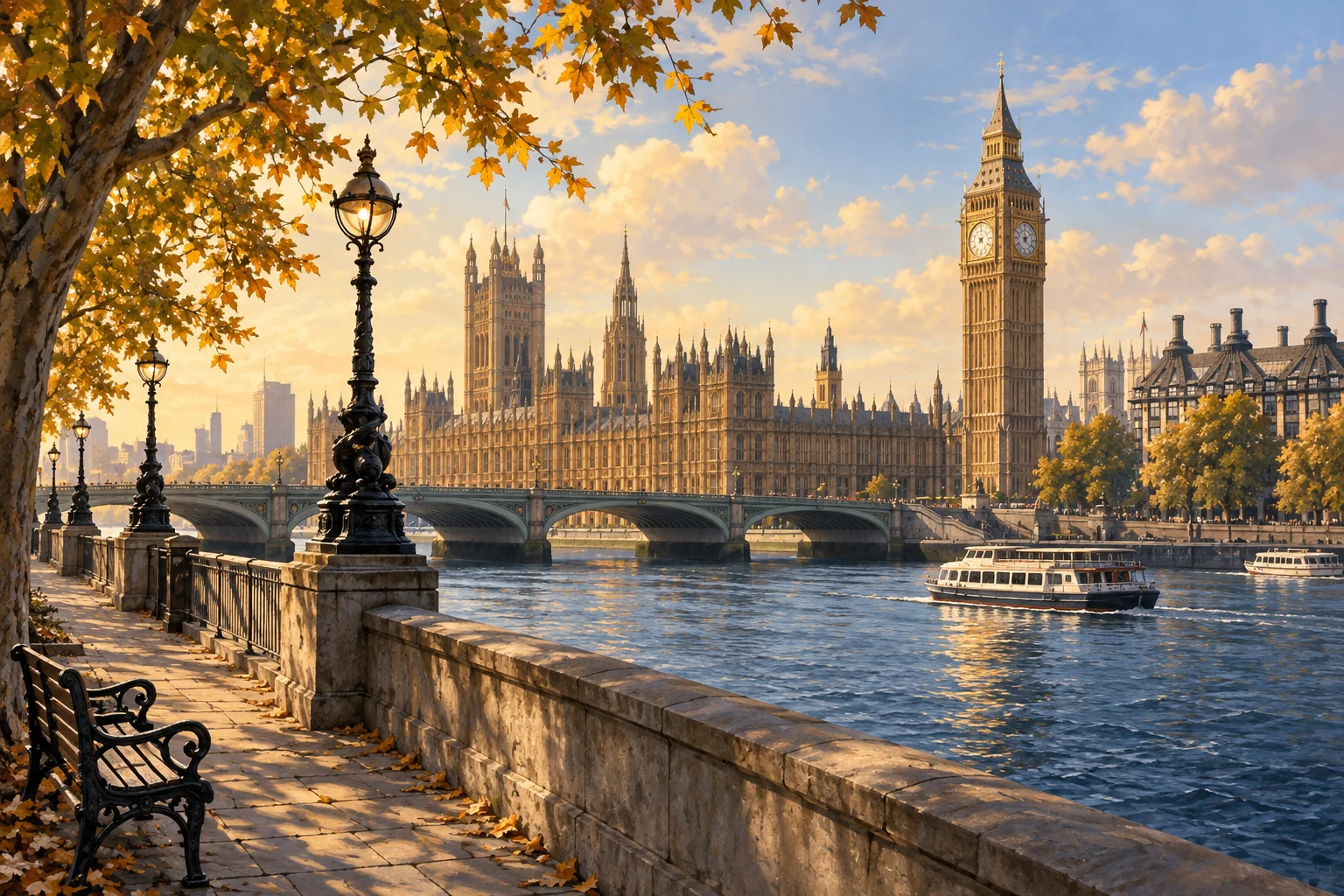
The Houses of Parliament and Elizabeth Tower form part of Westminster’s architectural setting beside the Thames. Looking at the exteriors and choosing an interior tour are different visit decisions. If façades and skyline interest you, shape your main question around observation. If you want to enter, check the institution’s date and visit-type information separately. Do not treat neighbouring buildings as parts of one ticket or shared opening arrangement. Making that distinction early gives the Westminster choice a clearer purpose.
Start the National Gallery with a painting question
The National Gallery at Trafalgar Square focuses on paintings. Choose a collection question: where do you look first in a picture, and what would you compare in two approaches to the same subject? Add that question beside the artist or work in your notes. If a particular painting is your main reason for going, check its current location and the floor plan. The institution notes that building works can close rooms and move paintings, so match your list to the current display rather than memorising an old room number.
Pair the South Bank setting with a programme choice
South Bank’s official description brings together Thames-side cultural places, walking and food. Your notebook here could explore the relationship between the river and culture rather than list buildings. Decide whether you want to observe the riverside or follow an institution’s programme. For the former, mark views that interest you on your map; for the latter, consult the dated programme. Place a meal break around that choice. If a particular performance is the purpose, check its date and ticket information directly with the institution.
The Tower of London is a different historical focus
The Tower of London is presented through its history as a fortress, palace and prison, with the Crown Jewels as a collection highlight. That interest can create a different choice from Westminster exteriors or a National Gallery painting day. Treat the Tower as a main focus rather than a compulsory final addition. Ask whether palace history, defensive architecture or the collection interests you most, then use the operator’s current visitor information to complete the practical decisions about your chosen visit.
Choose breaks and transport around your needs
St James’s Park offers lakeside paths and the setting around The Mall as an outdoor-break option. Do not turn the break into another task to finish. For travel between areas, TfL Journey Planner accepts your start and destination and offers least-walking and step-free preferences. Those controls do not mean a journey has been calculated here. Enter your own starting point, return plans and movement needs, then review the current result instead of assuming a fixed travel time between the choices.
Write your visit question before leaving
In an imagined plan, an art visitor writes “National Gallery: different approaches to one subject” and checks work locations and the floor plan. An architecture visitor asks how Parliament and Elizabeth Tower form a riverside view, researching the visit type separately if an interior tour interests them. A South Bank choice links riverside observation to a specific programme. Give your own note a place, an observation question and the current information it needs. Then check your starting and return points with TfL.