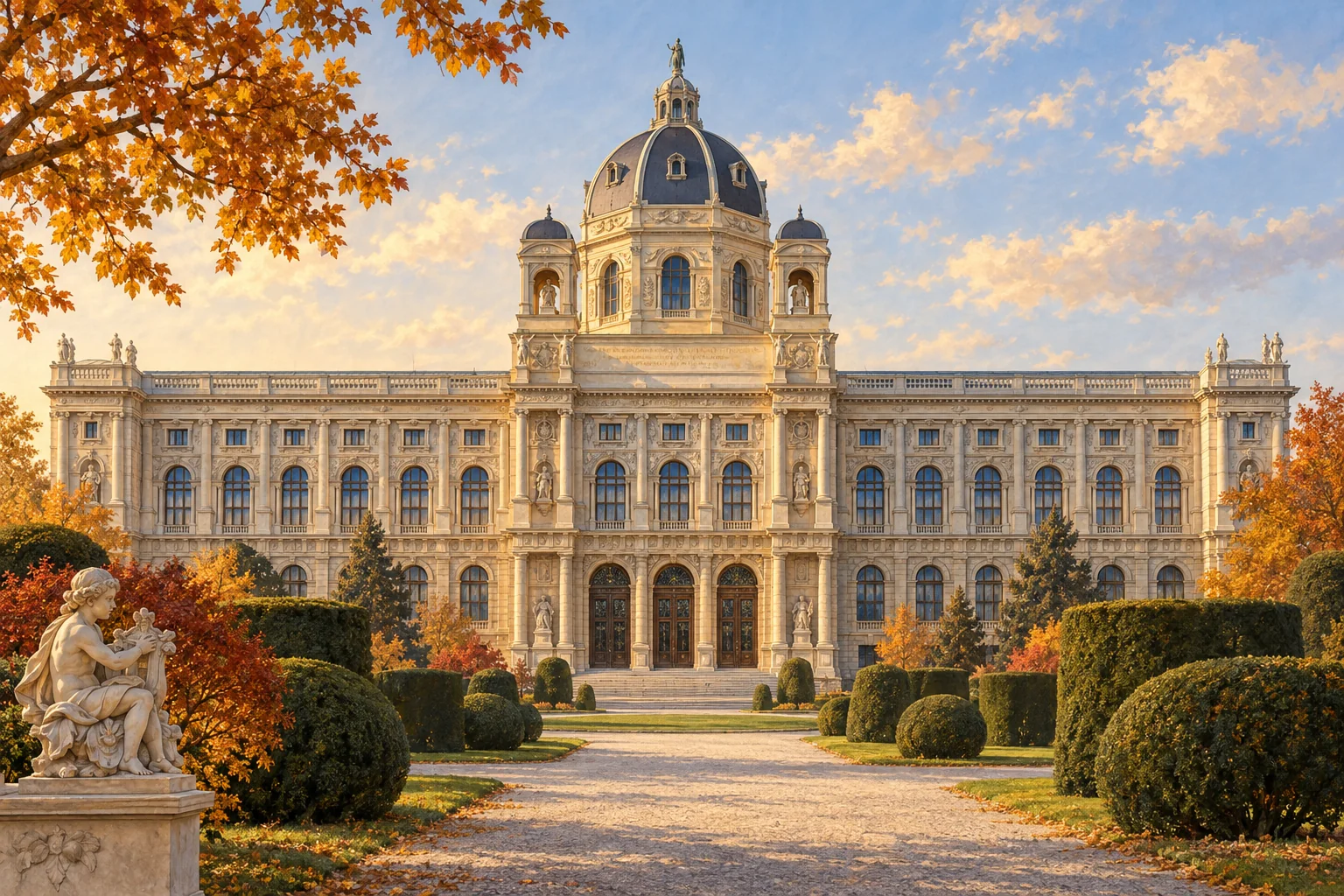
A collection or a palace interior?
Start a Vienna culture day by choosing what you want to examine: collection objects at the Kunsthistorisches Museum, or palace rooms at Schönbrunn. These interests do not form a package that must be completed in one day. One invites a choice of paintings, objects and periods; the other focuses on rooms and dynastic context. Choose the main institution, then narrow its scope with a question. Keep gardens, neighbourhoods and parks as separate options rather than automatic additions.
Start with one section at the KHM
The Kunsthistorisches Museum presents Habsburg art collections. Its Picture Gallery, Kunstkammer and ancient cultures collections offer three starting questions. In painting, where does your eye go first? In an object, what impression do form and detail create? In ancient cultures, which subject would you like to approach? These are ways to ask what you are looking at. Find your chosen section in current collection information and write a sentence about your focus, rather than only its name. Check a particular work’s location with the institution.
Read the building separately from its collection
The official tourism description also treats the museum’s historic decoration and staircase as architectural subjects. That offers another way to approach an art institution beyond individual works. Your observation question might concern the arrangement of spaces or the relationship between decoration and structure. These are suggestions for looking, not the promised content of a guided tour. An architectural focus simply clarifies where you want to place attention. It does not establish access or photography conditions for every part of the building.
Define your interest in Schönbrunn’s rooms
Schönbrunn is the former Habsburg summer residence, with palace rooms and gardens offering different visit themes. If interiors interest you, compare the official options before deciding on scope. The operator lists choices such as the Palace Ticket and State Apartments separately. Do not assume those names provide the same spaces or experience. The cultural decision here is to match the rooms you want with the chosen scope, rather than compare prices or fixed tour durations. A palace focus need not automatically include a second institution.
Do not make the garden an automatic addition
Put palace rooms and garden time on separate lines in your plan. The operator also presents garden options with different scopes, so a palace ticket name does not establish identical conditions for every outdoor area. Ask whether you want time outside or a focus on rooms. You can choose both, but choosing each deliberately prevents the programme from expanding unnoticed. When reviewing official information, check the option and date you actually intend, rather than carrying forward conditions from an earlier visit or older guide.
Consider Spittelberg for a neighbourhood break
Spittelberg, beside MuseumsQuartier, is described through Biedermeier buildings, small lanes, cafés and restaurants. After palace rooms or museum decoration, you could shift attention to neighbourhood scale. Ask about the relationship between street and building: which façade would you watch, and how would you describe the setting in a few words? These are prompts for your attention, not a prescribed itinerary. If choosing a meal break, check the business’s current menu and suitability for your needs. Review the connection to your main institution around your own mobility circumstances.
Keep Green Prater as an alternative
Green Prater offers meadows and a tree-lined main avenue for outdoor exploration. Its observation question can differ from a museum object or palace room: how would you compare open space with a tree-lined axis, and would you rather walk or rest during this part of the day? Make separate lines for an interior, a neighbourhood and green space, then mark which matches today’s curiosity. Treat the green-space choice separately from an amusement-park visit; it need not depend on a particular ride or event programme.
Turn the choice framework into a simple plan
In an imagined plan, a traveller chooses one KHM collection section and an optional Spittelberg break, leaving Schönbrunn for another day. Another traveller prioritises palace rooms, compares official visit scopes and decides on gardens separately. These are not tested routes or fixed time budgets. Write one line each for the main institution, the main question and an addition you could remove. Recheck the chosen institution before visiting. If the smaller plan still answers your cultural curiosity, it provides a useful framework for that day.